
MALLORY PAGE / NOCTURNES
DUET No. 1
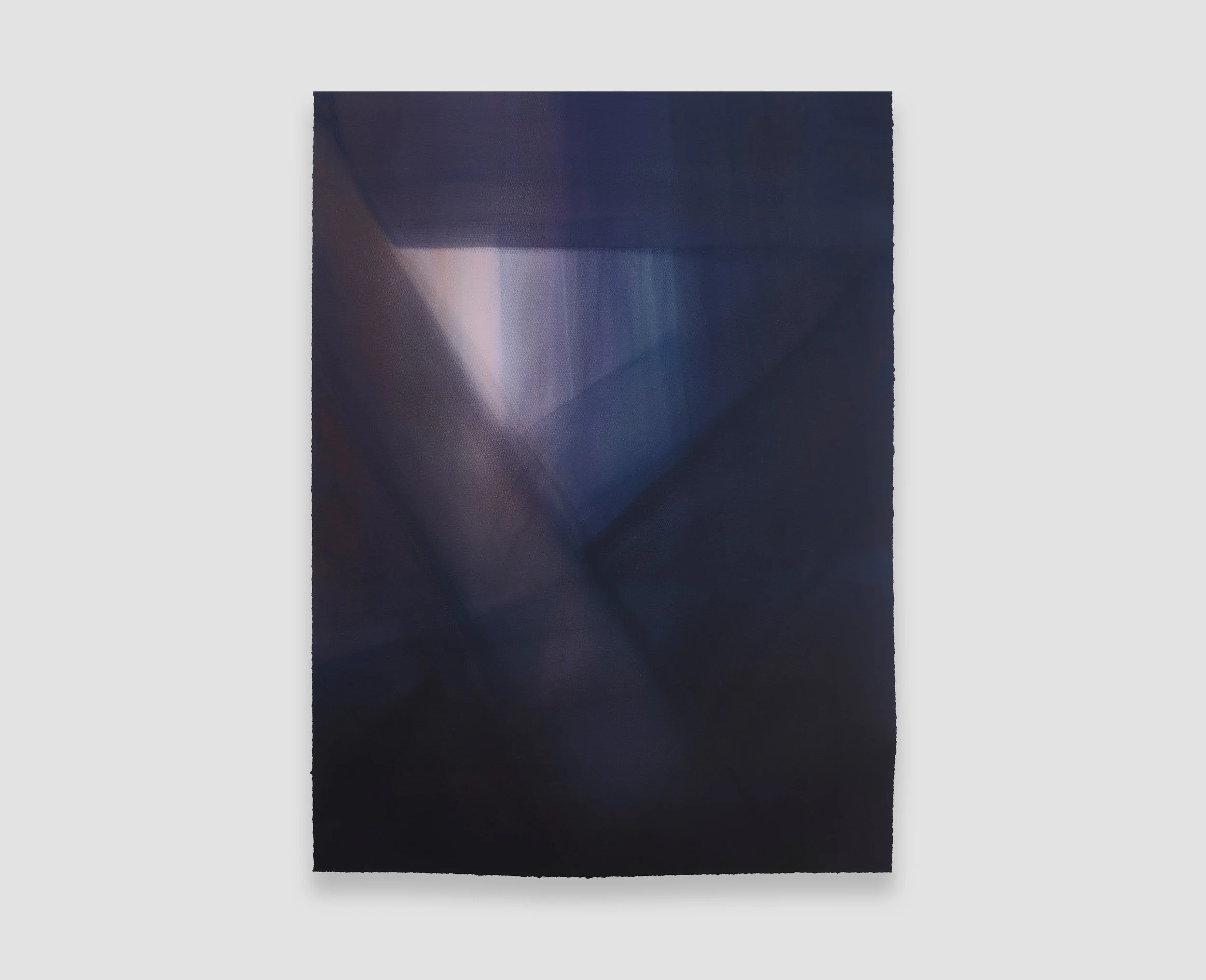
Edition of 50, plus APs to be released upon series completion
40 × 30 in (101.6 × 76.2 cm)
Archival pigment ink on Hahnemühle Hemp 290gsm paper (eco-friendly: 60% sustainable hemp fiber + 40% cotton; acid free, museum-quality longevity)
Hand-torn deckled edges
Each signed, numbered and dated by the artist
This edition will ship on or before March 1st.
Please note we do not offer exchanges or returns.
All sales are final.
The process is a study in noticing the night as a collection of atmospheres—hues, natural phenomena, artificial disruption—that hold the capacity to shift time itself. Over the last several years, paintings began to carry subtle characteristics of atmospheres in flux or held in transitional pause: layered abstractions tracing emotional arcs.
Four canvases, each at a point that could be considered complete, are selected and photographed; the image becomes evidence of an existence already receding. The canvases then return to the easel (the night is also a reset) to be reworked until reaching another moment of perceived emotive completion, where they are again photographed. This process is repeated, distilled; work is made sequentially but not paired or presented as such. In this practice, time has a way of being gathered and sorted rather than linear. This practice forms a temporal/visual palimpsest—adjunct surfaces in simultaneous becoming and vanishing, creating a single, heterogeneous field where no moment is truly separate or final.
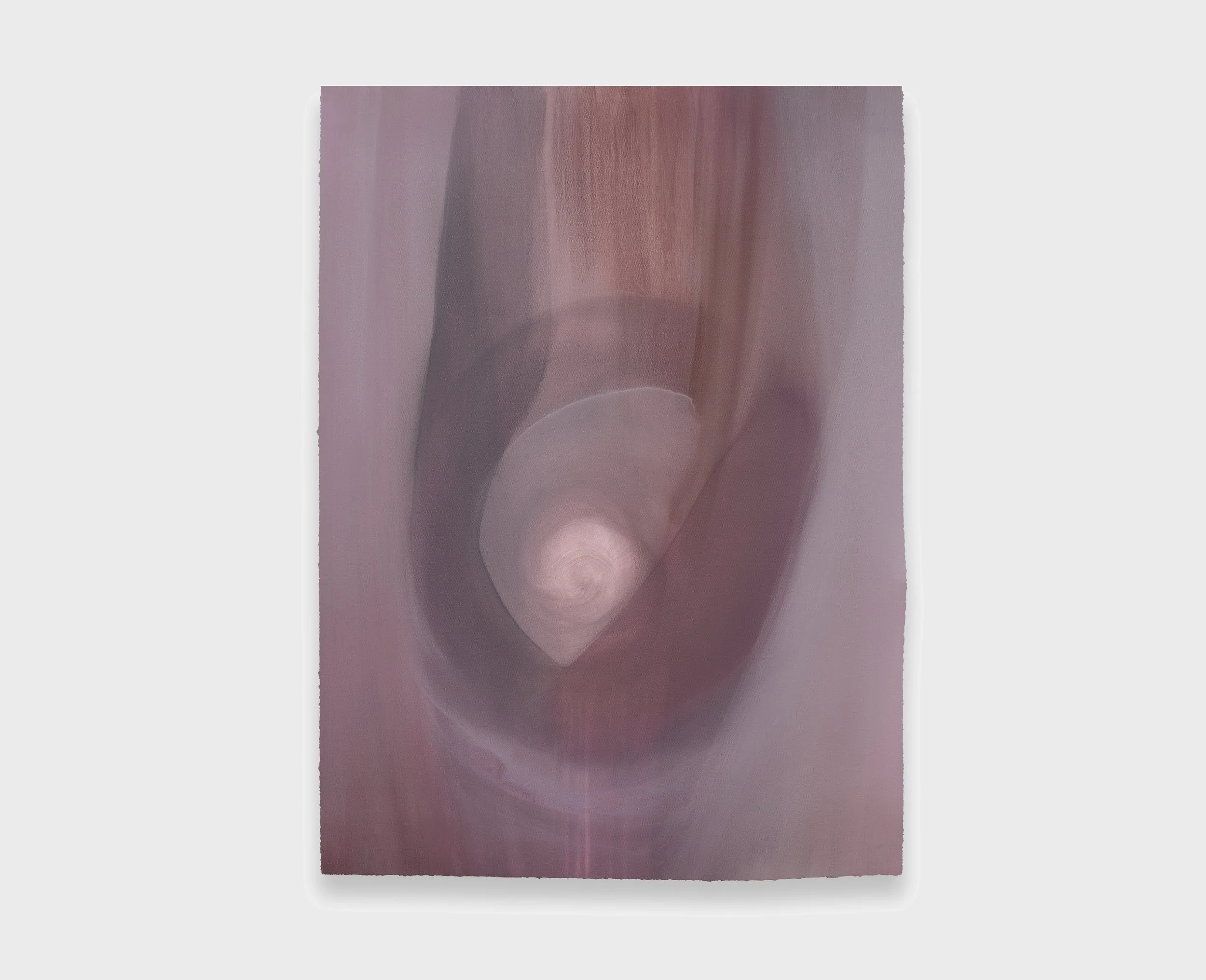
Edition of 50, plus APs to be released upon series completion
40 × 30 in (101.6 × 76.2 cm)
Archival pigment ink on Hahnemühle Hemp 290gsm paper (eco-friendly: 60% sustainable hemp fiber + 40% cotton; acid free, museum-quality longevity)
Hand-torn deckled edges
Each signed, numbered and dated by the artist
This edition will ship on or before March 1st.
Please note we do not offer exchanges or returns.
All sales are final.
The process is a study in noticing the night as a collection of atmospheres—hues, natural phenomena, artificial disruption—that hold the capacity to shift time itself. Over the last several years, paintings began to carry subtle characteristics of atmospheres in flux or held in transitional pause: layered abstractions tracing emotional arcs.
Four canvases, each at a point that could be considered complete, are selected and photographed; the image becomes evidence of an existence already receding. The canvases then return to the easel (the night is also a reset) to be reworked until reaching another moment of perceived emotive completion, where they are again photographed. This process is repeated, distilled; work is made sequentially but not paired or presented as such. In this practice, time has a way of being gathered and sorted rather than linear. This practice forms a temporal/visual palimpsest—adjunct surfaces in simultaneous becoming and vanishing, creating a single, heterogeneous field where no moment is truly separate or final.